23 November 2026
Lifestyle and family life, a guide for UK GPs
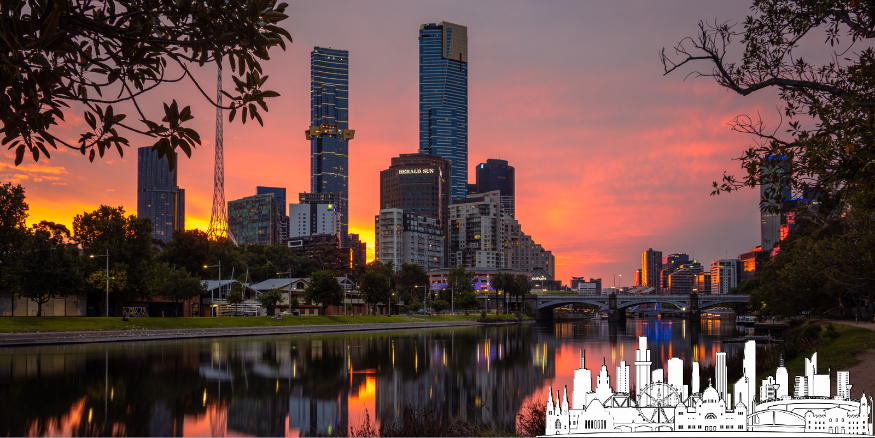
If you’re a UK GP thinking about relocating to Melbourne, you’ll be looking at one of Australia’s two biggest cities. Melbourne offers a wide choice of places to live, a strong food, arts and sporting culture, and easy access to the coast and countryside. This guide covers what everyday life there looks like. For current vacancies, see our Melbourne GP roles, click the image above.
Melbourne at a glance
Melbourne is the capital of Victoria, in south-east Australia, and sits around Port Phillip Bay. Around 5.44 million people lived in Greater Melbourne in June 2025, which makes it Australia’s second-largest city after Sydney.
Because the city covers such a large area, the suburb you choose shapes daily life a lot. Inner suburbs tend to be busier and more urban. Bayside and outer suburbs typically offer more space, which many families prefer. Your commute to the practice is worth thinking about early when choosing where to live.
Climate and outdoor life
Melbourne has a temperate climate with four seasons, and its weather is known for being changeable, sometimes within the same day. The long-term average daily high across the year in the city is around 20°C. Winters are mild by UK standards, with daytime highs typically in the low to mid-teens and frost uncommon in the city itself. Summers are warm, and most years bring at least one day above 40°C.
For families, there’s plenty to do outdoors. Port Phillip Bay has calm-water beaches close to the city, such as St Kilda and Brighton. Further out, the Mornington Peninsula, Phillip Island and the Great Ocean Road are popular for weekends and holidays. Inland, the Yarra Valley and the Dandenong Ranges offer walking, wineries and countryside within a short drive.
Family life and schools
Victorian government schooling runs from Prep to Year 12. The school year starts in late January and finishes in December, split into four terms. Melbourne also has a large number of Catholic and independent schools.
For relocating families, whether you pay government school fees depends on your visa. Victoria’s Department of Education says the fees, if any, are determined by the visa subclass and category, and it publishes an International Student Visa Fee Table to check this. Australian citizens and permanent residents don’t pay tuition fees, although schools can still ask for contributions towards things like materials and excursions. Check the fee table for your visa before you budget for schooling. We can also talk this through with you as part of planning your move.
Culture and sport
Sport is a big part of life in Melbourne. The Melbourne Cricket Ground (MCG) hosts the AFL Grand Final each September and the Boxing Day Test, and the Australian Open tennis takes place at Melbourne Park each January. Many families follow an AFL club, and junior sport is widely available.
The city also has a busy arts and food scene. The National Gallery of Victoria, Melbourne Museum and State Library Victoria are all in or near the city centre, and the city’s laneways, markets and cafés are a big part of its character.
Getting around
Melbourne has an extensive public transport network of trains, trams and buses, paid for with a myki card. The city’s tram network is one of its best-known features, and trams are free to use within the Free Tram Zone in the city centre. The Metro Tunnel opened in late 2025, adding five new underground stations: Arden, Parkville, State Library, Town Hall and Anzac. It gives direct train access to the Parkville area, where several of Melbourne’s major hospitals and universities are located.
Staying in touch with home
Victoria uses daylight saving time, and so does the UK, but in opposite halves of the year. In practice, Melbourne is 11 hours ahead of the UK during the UK winter and 9 hours ahead during British Summer Time. For a few weeks around late March and October, while the clocks are changing, the gap is 10 hours.
Thinking about Melbourne?
If Melbourne sounds like a good fit for you and your family, take a look at our current GP roles in the area, click here. Or get in touch for a confidential conversation about registration, visas and timelines.
Call us on 0113 868 2333 or email [email protected].